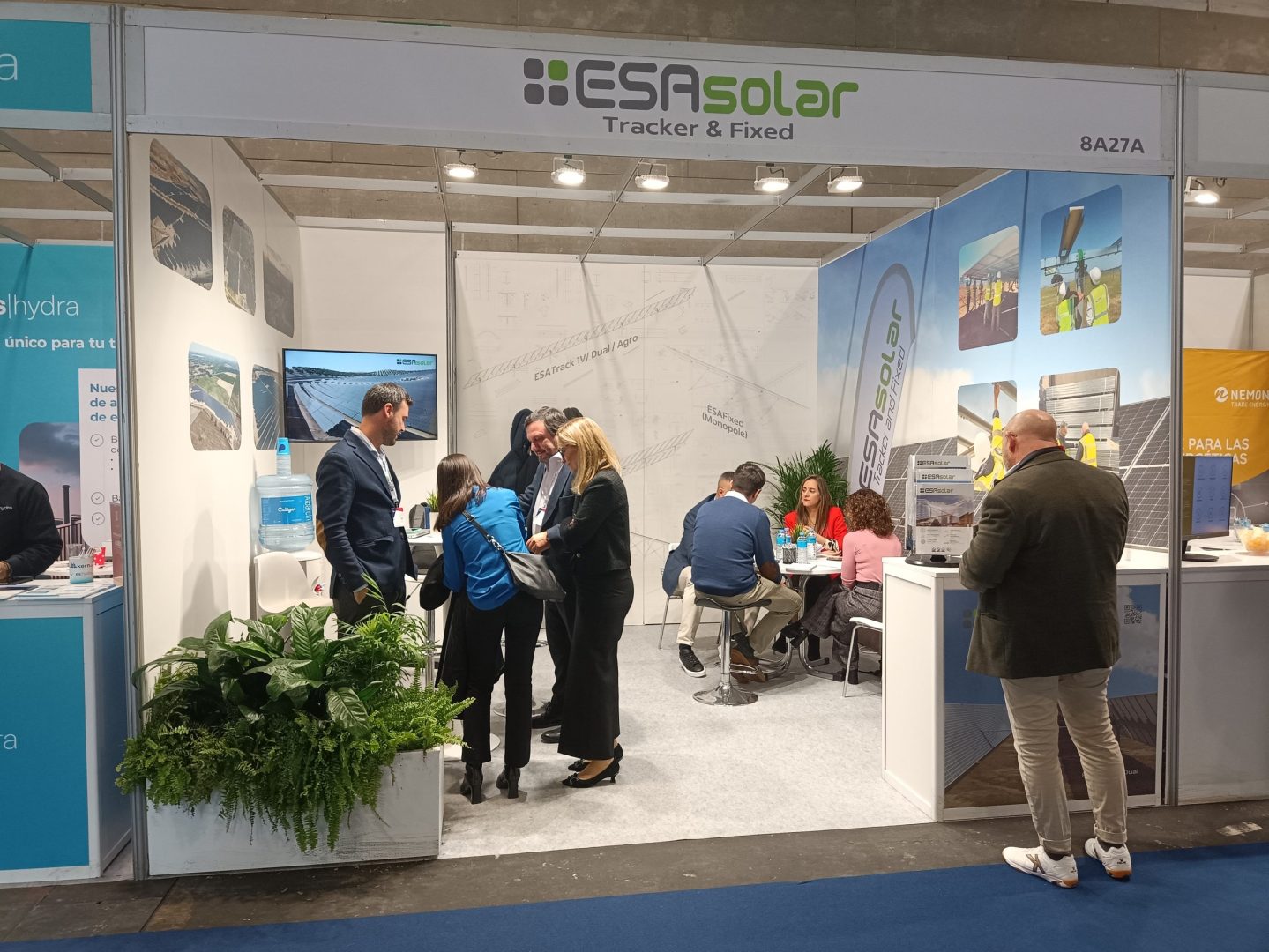

Spain’s ecological transition has moved beyond a debate focused solely on technology or administrative timelines to become a social reality experienced on the ground, day by day, as reflected in the concept of the social sustainability of photovoltaics. When we talk about large-scale renewable projects, attention usually focuses on developers or installed capacity figures. However, for companies in the auxiliary industry such as ESAsolar—specialised in the design and manufacturing of solar structures and trackers—the challenge runs much deeper: our technology is the visible face of the transition in the territory.
Visual impact and landscape integration
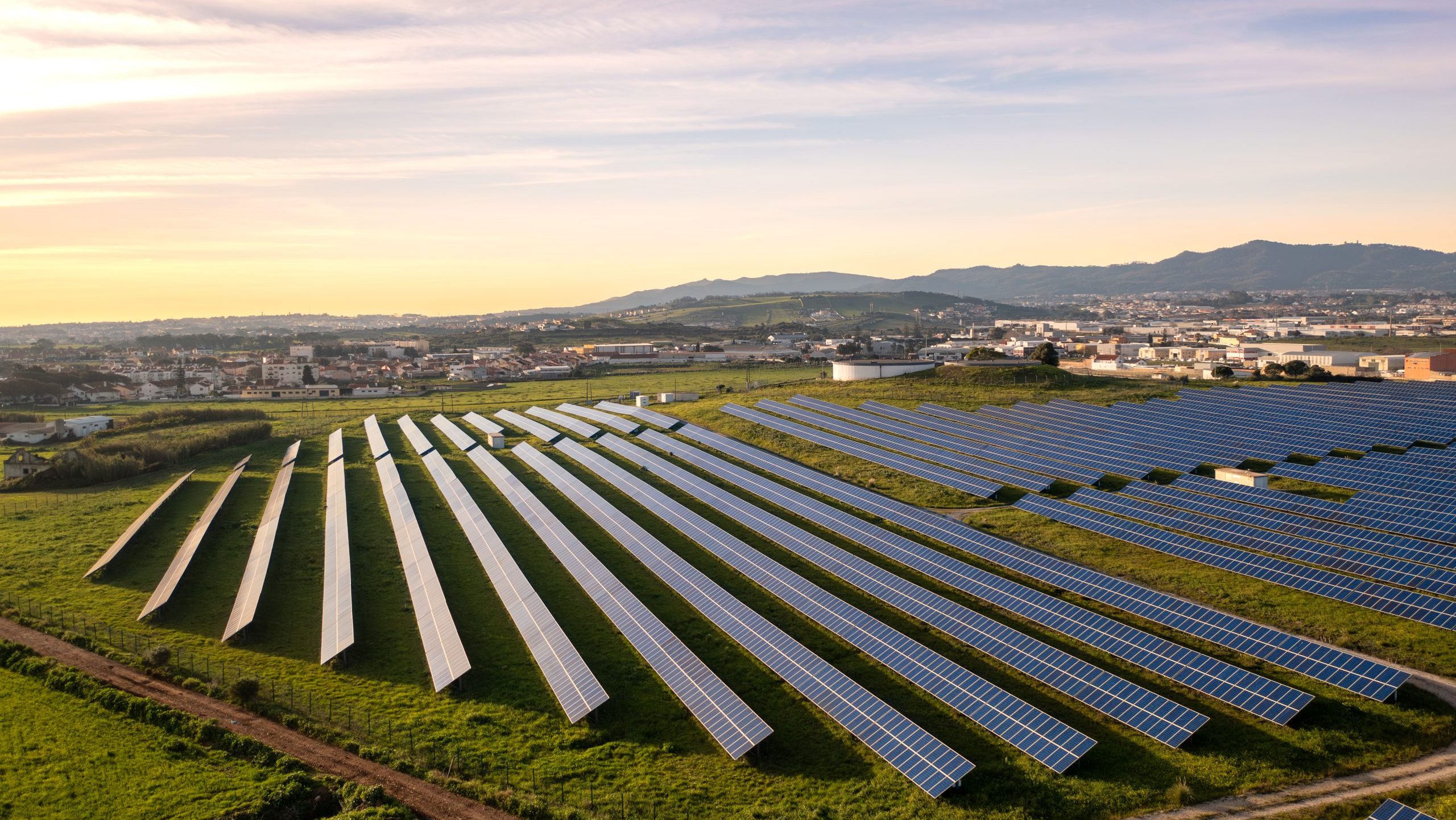
One of the key issues in the debate on social sustainability is the concern surrounding visual impact in local communities. For residents, a photovoltaic plant is not just a figure in an official gazette; it is a set of structures that transform their everyday surroundings. In this context, ESAsolar’s work becomes critically important. The design of structures and trackers must aim not only for energy efficiency, but also for harmonious integration with the landscape.
Implementing solutions that minimise height or adapt to the terrain directly helps reduce the sense of intrusion sometimes felt by local communities. Well-designed infrastructure is the first step towards obtaining a “social licence”—that unwritten but essential consensus that allows a project to be welcomed and accepted in the long term.
Land optimisation and respect for the primary sector
The scale of photovoltaic projects, which can sometimes cover hundreds of hectares, often generates mistrust among farmers and local landowners. From the perspective of the structures industry, our responsibility lies in the efficient use of land.
Next-generation solar trackers make it possible to maximise energy production on a smaller surface area, enabling developers to prioritise less productive land or avoid areas of high agricultural value. The goal is for photovoltaics not to be perceived as a threat to traditional ways of life, but as an ally that can coexist with them.
Durability: Being a “neighbour” for three decades
A photovoltaic project has a lifespan that can exceed 30 or even 40 years. Throughout that time, ESAsolar’s structures become part of the municipality’s industrial heritage. As highlighted in sustainability forums/events—and more recently at the 4th Sustainability and Biodiversity in Photovoltaic Plants Conference held at the Spanish Congress of Deputies—companies in the sector should aspire to be “just another neighbour”.
For the auxiliary industry, this means guaranteeing the highest quality and durability of materials. A deteriorated structure is not only a technical issue; it represents a continuous negative impact on the municipality’s image and on residents’ perceptions. Delivering robust technology ensures that the initial investment translates into peaceful and productive coexistence, helping to prevent depopulation and environmental degradation alike.
Transparency as the foundation of trust
Although direct engagement with local councils usually falls to project developers, the auxiliary industry must support this chain of trust through transparency and technological education. It is essential to explain what is being installed, why the technology is safe, and how it benefits local development. We emphasise not only the economic benefits derived from additional municipal revenues, but also the contribution these projects make to combating depopulation—particularly in very small municipalities.
Ultimately, social sustainability is not an abstract concept, but the result of ongoing dialogue and impeccable technical execution. At ESAsolar, we understand that our structures are the physical backbone of a cleaner energy future—but they must also support a relationship of respect and mutual benefit with the territories that host them. The transition will only be successful if, in addition to decarbonising the economy, it strengthens the social and economic fabric of our rural communities.